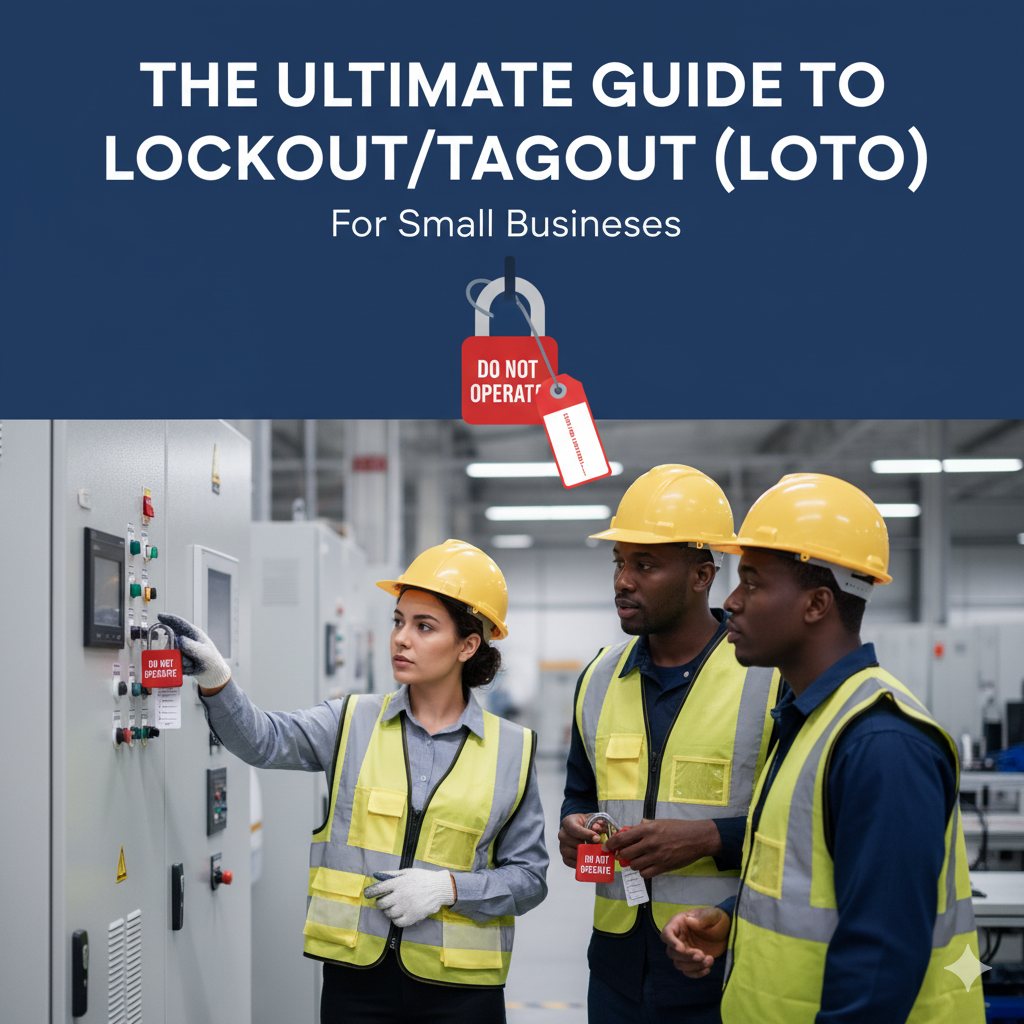
For a small business, managing safety might feel overwhelming, but some regulations are non-negotiable. One of the most critical is Lockout/Tagout (LOTO). This procedure is designed to prevent the unexpected startup of machinery and the release of hazardous energy during maintenance or servicing. Ignoring LOTO can lead to severe injuries, fatalities, and hefty fines. This guide will break down everything a small business owner needs to know to implement a successful LOTO program.
What is Lockout/Tagout (LOTO)?
LOTO refers to specific practices and procedures that safeguard employees from the unexpected energization or startup of machinery and equipment, or the release of hazardous energy during service or maintenance activities. Hazardous energy can be electrical, mechanical, hydraulic, pneumatic, chemical, thermal, or other sources.
- Lockout: The placement of a lockout device (like a lock) on an energy-isolating device, ensuring the equipment cannot be operated.
- Tagout: The placement of a tagout device (a prominent warning tag) on the same energy-isolating device, indicating that the equipment is not to be used.
Why LOTO is Crucial for Small Businesses
Small businesses often operate with fewer resources and a close-knit team. An accident, particularly one caused by a lack of LOTO, can have a devastating impact.
- Employee Safety: It is the single most effective way to prevent injuries from machine startup, such as crush injuries, amputations, and electrocution.
- Legal Compliance: OSHA (Occupational Safety and Health Administration) and other regulatory bodies have strict standards for LOTO. Failure to comply can result in serious citations and fines.
- Reduced Downtime: A properly implemented LOTO program minimizes accidents, which in turn reduces costly medical expenses, lost work time, and insurance premium increases.
- Improved Culture: Committing to LOTO demonstrates a genuine care for employee well-being, fostering a stronger safety culture and increasing morale.
Key Steps to a LOTO Program for Your Small Business
Implementing a successful LOTO program doesn’t have to be complicated. Follow these core steps:
Step 1: Develop a Written LOTO Program
Every small business needs a clear, written LOTO policy. This document should outline:
- Purpose and Scope: The objective of the program and which machinery it applies to.
- Employee Roles: Define who is an “authorized,” “affected,” or “other” employee.
- Specific Procedures: Detailed, machine-specific instructions for safely locking out each piece of equipment.
- Training Requirements: How employees will be trained on the program.
Step 2: Identify and Isolate All Energy Sources
Walk through your facility and identify all machinery and equipment that could pose an energy hazard. For each piece of equipment, list every energy source (e.g., electrical disconnects, valves, pressure lines). Train your team to recognize and locate these sources.
Step 3: Procure the Right LOTO Devices
You will need a supply of high-quality lockout devices.
- Locks: Use unique, standardized locks for LOTO purposes only. Each authorized employee should have their own assigned lock and key.
- Tags: Tags should be durable, clearly state “DO NOT OPERATE,” and include the name of the person who applied the lock.
- Group Lockout Devices: If more than one person is working on the same machine, a group lockout device or hasp allows each person to place their own lock on the same energy source.
Step 4: Implement a Rigorous Training Program
Training is the backbone of LOTO. All employees must be trained, but the level of training varies by role:
- Authorized Employees: Those who perform the servicing and maintenance. They must be fully trained on the LOTO procedure for all relevant equipment.
- Affected Employees: Those who operate the equipment being serviced. They must understand the purpose of LOTO and the importance of not tampering with locks or tags.
- Other Employees: Everyone else in the workplace. They should be aware of the LOTO program and understand that they must not interfere with locked-out equipment.
Step 5: Conduct Periodic Inspections and Audits
OSHA requires that LOTO procedures be inspected at least annually. A designated competent person must review the program’s effectiveness and observe an authorized employee performing a LOTO procedure. This audit ensures the procedure is still effective and identifies any necessary updates.
By taking these steps, a small business can build a robust LOTO program that not only meets legal requirements but, more importantly, protects its most valuable asset: its people.
About the Author